




Babylon House, an Avalon castle that has captured imaginations for more than seven decades, has claimed two prestigious awards at the recent NSW Architecture Awards, cementing its status as one of Sydney’s most extraordinary homes.
It won two awards: The John Verge Award for Interior Architecture and the award for Alterations and Additions, recognising the masterful restoration and expansion that has brought this iconic structure into the modern era.
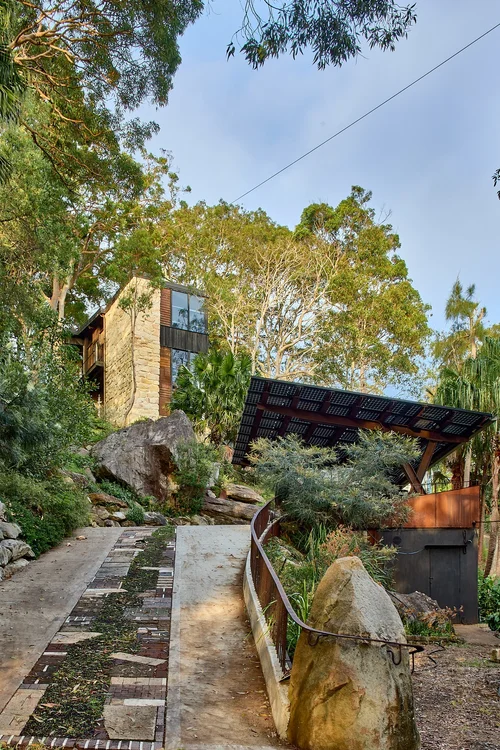
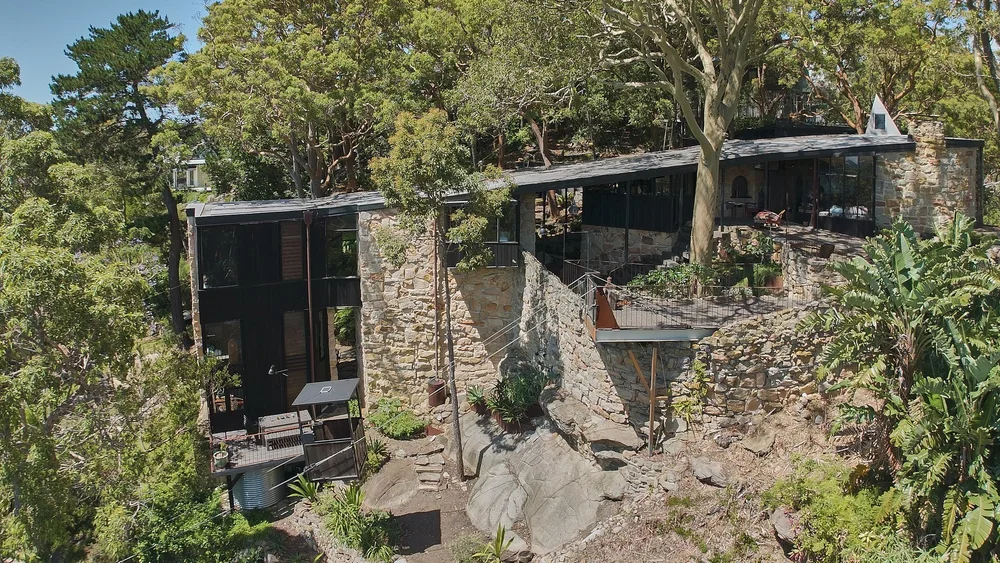
The property, which locals have long dubbed ‘The Castle’ due to its fortress-like appearance, sits dramatically on Bilgola Plateau between Pittwater and Avalon Beach. Built in the early 1950s by architect Edwin Kingsberry, the house was originally christened Götterdämmerung – a reference to Wagner’s Ring Cycle that reflected the opera-loving architect’s theatrical sensibilities.
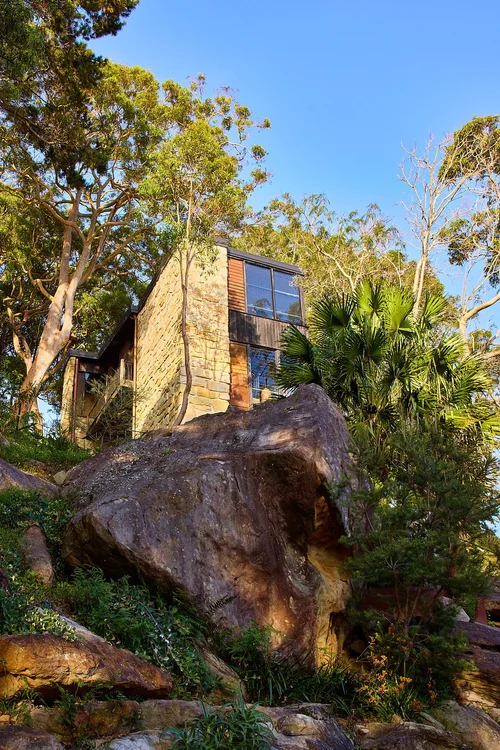
The property’s colourful past reads like something from a novel. It was the opera devotee architect Edwin Kingsberry’s idea, who sold the land on the condition he could build exactly the house he envisioned. The arrangement became more complicated when Kingsberry began a relationship with the buyer’s wife, adding an element of scandal to the home’s early years.
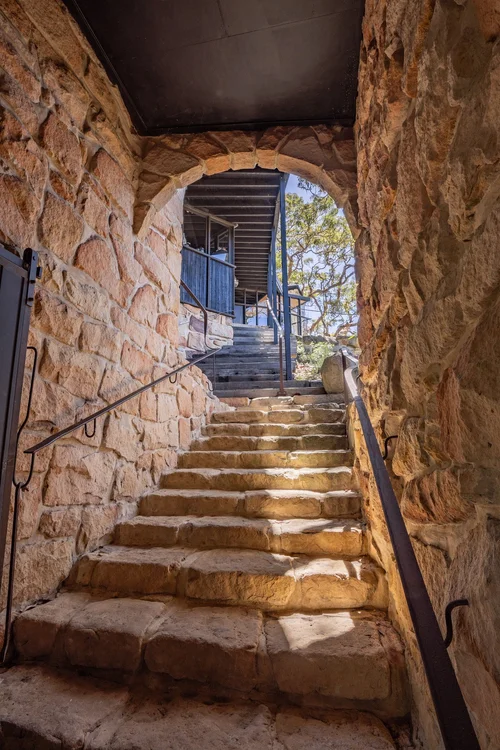
During the 1960s and 70s, the house gained notoriety as a bohemian gathering place, with the owners’ son – a member of the Bilgola Bop Band – hosting legendary parties that attracted Sydney’s creative crowd. Among those who climbed the property’s distinctive stone steps during this era was interior designer Fiona Spence, who would decades later become the home’s current owner.
Spence and her husband, former concert production manager Morris Lyda, purchased the deteriorating property in 2015. Despite its neglected state, they recognised the potential to restore its unique character while adapting it for contemporary living.
The couple engaged Casey Brown Architecture’s Rob Brown to lead the restoration, which proved to be an exercise in balancing respect for the original architecture with practical modern needs. The project required sensitive handling of the building’s eclectic mix of styles – combining modernist elements with what architectural circles term the ‘Sydney School’ approach.

The restoration began with essential infrastructure improvements, including the installation of a cable car system to ease access from a new solar-powered carport and the careful restoration of the property’s dramatic stone steps with handcrafted wrought-iron handrails.
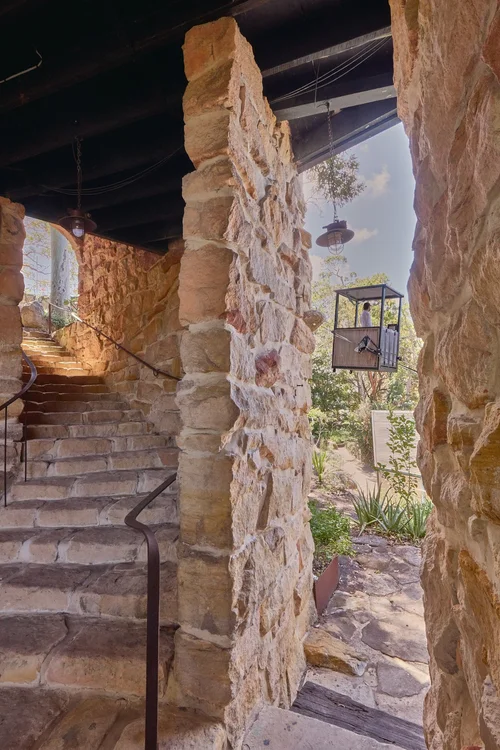
The existing three-storey structure, complete with its unusual trapdoor entrance to a basement bathroom, underwent comprehensive renovation. Workers repointed the sandstone walls, restored the central fireplace, and replaced the extensive roof system that spans multiple wings and outdoor areas.
Among the most striking new elements is a four-metre pivoting wall in the east wing and a guillotine-style steel shutter that dramatically separates the bar area from the terrace. However, the project’s most significant addition was an entirely new southern wing housing bedroom, ensuite, walk-in robe, study and powder room.
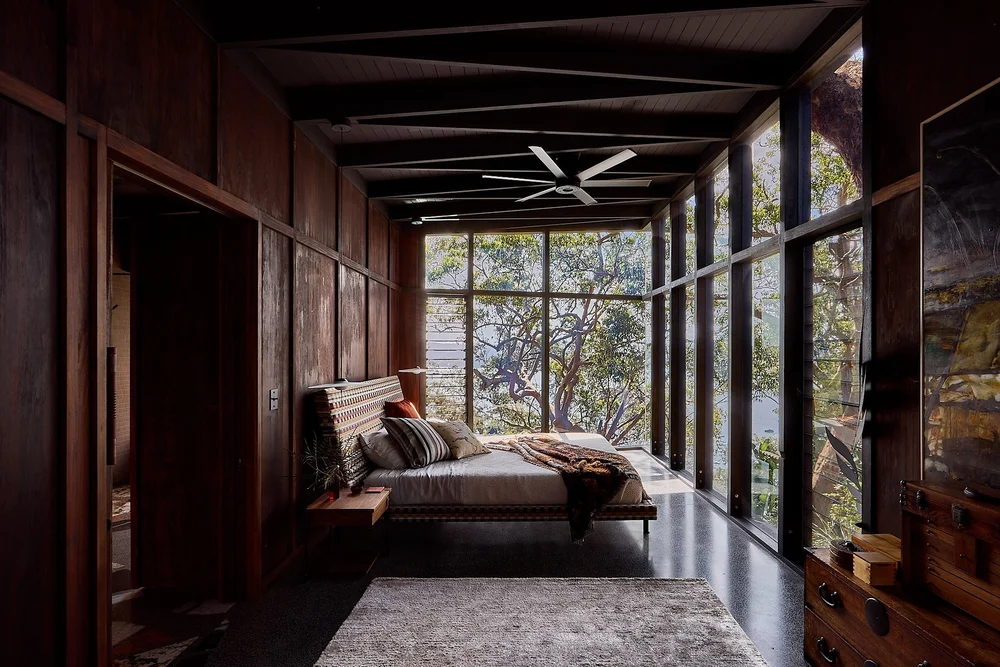
This new section showcases perhaps the most innovative aspect of the renovation – its integration with the natural landscape. Rather than removing the site’s massive boulders and established trees, the architects built around them, allowing living rock to extend into the interior spaces.
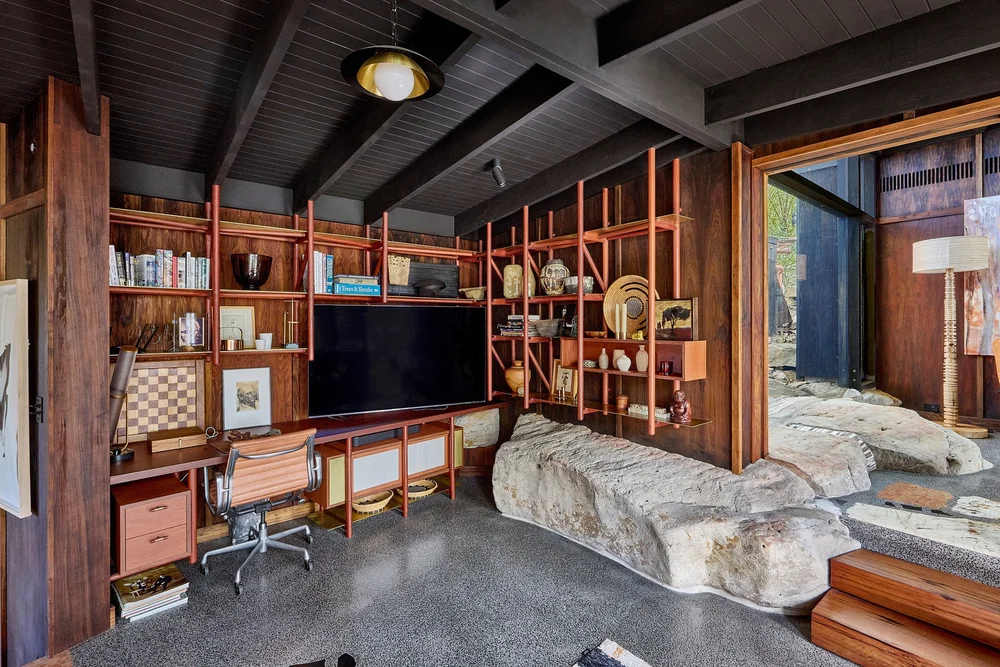
The flooring throughout the new areas represents a particularly personal touch from Spence, who designed intricate terrazzo surfaces embedded with recycled marble and granite pieces. Drawing inspiration from Canberra’s Monster Kitchen and Bar and the original bathroom, she arranged the stone elements like an abstract artwork before the terrazzo was poured around them.
The material palette throughout celebrates both old and new, featuring black-painted ceilings and Tasmanian blackwood walls that Spence treated with a custom vinegar-and-steel-wool solution to achieve a distinctive ‘pickled’ finish.

Now called Babylon is a residential property built over four levels on a sheltered promontory west of Avalon Beach, and the completed renovation has attracted significant attention from the architecture community. Beyond its recent NSW Architecture Awards success, the project has also been shortlisted for this year’s Houses Awards in the alteration and addition under 200 square metres category.
The recognition reflects not only the technical achievement of the restoration but also the way it has preserved and enhanced a building that has long held a special place in the Northern Beaches community’s imagination.
For residents of Avalon and the broader peninsula, Babylon House represents both a connection to the area’s creative past and an inspiring example of how thoughtful renovation can breathe new life into architecturally significant buildings while respecting their essential character.
The property’s journey from Kingsberry’s operatic vision through its bohemian heyday to its current incarnation as an award-winning family home demonstrates the enduring appeal of bold architectural choices and the importance of owners who understand the responsibility that comes with stewarding such unique properties.
Published 11-July-2025